
2026–2027
Elsa Anglade, Associate Professor at LTDS/ENTPE

Conference Abstract
This presentation traces the series of projects that led me to my current research topic. During my studies, I developed a particular interest in masonry structures, and specifically in issues related to their seismic vulnerability. The first part of my presentation will illustrate various methods for analyzing the seismic vulnerability of masonry structures depending on the scale of the study.
In the second part of my presentation, I will discuss my current research topic on rammed earth construction. In recent years, rammed earth construction has seen a resurgence of interest due to its low environmental impact. However, the use of this material in new construction remains challenging, particularly due to the lack of standards and the difficulty in finding insurers. Indeed, raw earth is a complex material with a highly variable composition, and its mechanical properties change significantly depending on its water content. In my thesis research and my work at ENTPE, I have developed several experimental and numerical approaches to better understand the hygromechanical behavior of raw earth, and thus help facilitate the selection of this material in new construction through the development of best-practice guidelines and standards.

Elsa ANGLADE’s Career Path
Elsa Anglade is currently an associate professor at LTDS/ENTPE. She joined the ENS in 2015 and specialized in the restoration of historic monuments while pursuing the SAHC international master’s degree. In 2022, she earned a Ph.D. in civil engineering from the LMDC in Toulouse. After a postdoctoral fellowship at the 3SR laboratory in Grenoble, she joined ENTPE in 2023 as an associate professor at the LTDS laboratory.
Almanza Morgan, Associate Professor, Paris-Saclay University, ENS Paris-Saclay, SATIE Laboratory
Conference Abstract
Innovative systems are driven by advances in functional materials. In conjunction with Morgan Almanza’s research, we highlight application examples such as electrocaloric refrigeration, aortic amplification for cardiac support
, thermomagnetic generators, and sustainability issues in the field of electrical engineering.
Morgan Almanza’s Career Path
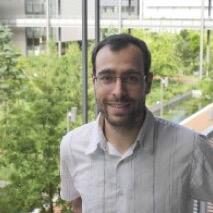
2006 ENS Paris-Saclay
2011–2014 Ph.D. thesis, G2Elab, Université Grenoble Alpes
2014–2018 Assistant Professor, ENS Paris-Saclay
2018–2019 Research Associate, EPFL
Since 2019 Assistant Professor, ENS Paris-Saclay
Bruno Duplessis, Lecturer and Researcher at the Center for Energy, Environment, and Processes (CEEP) at Mines Paris – PSL
Conference Abstract
Energy demand management can be defined as the set of actions aimed at reducing the volume of energy consumption by users: this may involve reducing the intensity of use (energy conservation), improving efficiency (same use but less energy), or improving control or regulation. For the electricity sector, managing the power drawn is an additional consideration, particularly for electricity infrastructure operators. As part of the “Energy Demand Management” team at CEEP/Mines Paris PSL, I conduct research on the modeling, simulation, and optimization of building energy systems—ranging from individual equipment to urban energy systems—at various scales (building, neighborhood, city, and region). In collaboration with public and private partners, my research mission can be broken down into three areas: developing energy modeling and simulation methods; producing tools and methods that can be transferred to industry; and informing public and private decision-making.
During this conference, I will illustrate the various dimensions of this research through a range of recent studies focused on the energy modeling of buildings at the regional scale. This research theme relies on the use of large databases through models adapted, on the one hand, to the quantity and quality of available data describing buildings, their systems, and occupants, and, on the other hand, to the large-scale thermal and energy simulation of energy consumption. The development of appropriate models and the management of uncertainties—both in data processing and in modeling choices—are at the heart of the challenges associated with developing these tools.
Bruno DUPLESSIS’s Career Path
Bruno Duplessis enrolled at ENS Cachan in 2000 and passed the agrégation exam in civil engineering, specializing in “technical systems and energy,” in 2003. He completed his fourth year as an ENS student in the specialized master’s program “Optimization of Energy Systems” at the École des Mines de Paris, before beginning his doctoral thesis there in 2004 at the Energy Research Center.
Bruno Duplessis defended his thesis in energy engineering titled “Implementation of Energy Performance Contracts for the Improvement of Refrigeration Production Facilities ” in 2008 and began his career as a faculty member on secondment at the École des Mines de Paris. In 2014, he joined the faculty of the Institut Mines Telecom as an Assistant Professor at the Energy Center of the École des Mines de Paris, as part of the “Energy Demand Management” team.
2025–2026
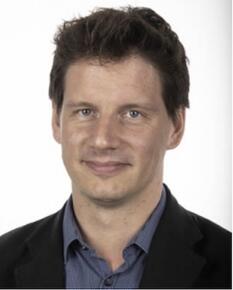
Loïc QUEVAL, professor at CentraleSupélec
Conference summary
Copper cables, which are essential for electricity transmission, face challenges due to rising global energy demand and strained supply chains. Superconducting materials have zero electrical resistance, opening up new possibilities for a sustainable and efficient energy system.
In this presentation, we will highlight three research projects conducted at GeePs at CentraleSupélec:
◉ Standardization efforts: contributing to a globally unified methodology for measuring the critical current of a superconducting cable;
◉ SupraMarine Project: development of superconducting submarine cables for offshore wind farms;
◉ SuperRail Project: the world’s first commercial installation of superconducting cables for railways.
Loïc QUEVAL’s Career Path
Loïc QUEVAL earned his Ph.D. from the University of Tokyo, Japan, in 2013. He is currently a full professor at the GeePs-CNRS laboratory, CentraleSupélec, Université Paris-Saclay, Gif-sur-Yvette, France. His research focuses on direct-current power grids and applications of superconductivity.
Alexandra BERTRON, University Professor, Director of INSA Toulouse

Conference Abstract
The sustainability of civil engineering infrastructure is one of the factors that profoundly influences the environmental, economic, and societal impacts associated with its construction and operation. Certain strategic infrastructure projects—such as those for energy production (including renewable energy), the storage and treatment of various types of waste, and the supply of drinking water and wastewater—are exposed to aggressive environments with complex chemical compositions that contain, in particular, microorganisms. Understanding the biogeochemical interactions between cementitious materials and biologically aggressive environments is a crucial step in the development of durable and resistant concretes for these structures. This major challenge faces a number of scientific and technical obstacles. On the one hand, the environments in question have complex compositions that often vary over time and space; on the other hand, microorganisms play a major and specific role in the deterioration of materials. Specific testing methods that account for the biological component are also essential. Drawing on several concrete applications, this presentation will aim to outline the phenomena and general challenges associated with the biodeterioration of concrete in various environments. I will detail the latest scientific and technical advances, as well as the major challenges that various stakeholders in the construction industry (in research, innovation, infrastructure management, standardization, etc.) will face in the coming years.
The final part of the presentation will be devoted to another challenge. After working for 20 years as a passionate faculty member and researcher, I decided to shift my career toward new responsibilities: leading a higher education and research institution, the INSA Toulouse engineering school. I will detail the new challenges—strategic, human, political, financial, and socio-economic—as well as the learning opportunities that this new direction allows me to explore with commitment and enthusiasm on a daily basis, and how the education I received at the ENS served as an excellent springboard for my professional journey.
Alexandra BERTRON’s Career Path
Alexandra Bertron holds an agrégation in Civil Engineering and is a graduate of the École Normale Supérieure de Cachan (MSc, ENS Paris Saclay, France), which she joined in 1996. She earned her Ph.D. in 2004 from INSA Toulouse, France. She was then appointed as an Associate Professor at the University of Toulouse in 2006 and as a Full Professor at INSA Toulouse in 2015. From 2021 to 2024, she served as associate director of the Materials and Structural Durability Laboratory (LMDC, 130 staff members, including 53 professors and associate professors and 60 doctoral students). Her research focuses on the durability of cementitious materials in complex, chemically aggressive environments, particularly in biological environments (sewage systems, agricultural environments, radioactive waste storage, marine environments, etc.) and the associated biogeochemical interactions, as well as indoor air quality (gaseous and microbial pollution, photocatalysis).
She has received several honors, including the RILEM Robert L’Hermite International Medal (2014) and the title of RILEM Fellow (2021). She was also recognized as a junior member of the IUF (2016–2021). She served as editor-in-chief of the journal *RILEM Technical Letters* and as associate editor of *Materials and Structures*. In 2024, she served as Honorary President of RILEM, in her capacity as chair of the 78th RILEM Week and the SMS Conference, which she organized in Toulouse in August 2024.
Since January 1, 2025, Alexandra Bertron has been director of INSA Toulouse, a five-year engineering school with 3,200 students and 750 staff members.
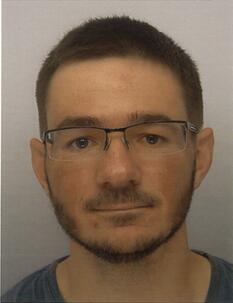
Kevin GODINEAU, Associate Professor (Faculty Member and Researcher) at ENS Paris-Saclay, Department of Mechanical Engineering
Conference Abstract
This conference will be divided into two parts.
The first part will outline my career path, from my year at SAPHIRE to my current position. To give you some perspective on the roles of a CPGE instructor and a lecturer, I’ll also take you behind the scenes. For example, being a lecturer involves teaching and conducting research, but it also entails other responsibilities: pedagogical duties, mentoring, securing funding, and so on.
In the second part, I will present some of the research topics I am currently working on. These focus on metal additive manufacturing (3D printing). The goal is not to go into detail, but rather to showcase the diversity of research topics. The scientific aspect will focus on improving additive manufacturing processes by taking into account the physics of the process and machine behavior.
Kevin GODINEAU’s Academic and Professional Background
- 2012–2013: SAPHIRE program
- 2013–2014: Master’s 1 in Mechanics of Materials and Structures (MMS)
- 2014–2015: FESup Master’s 2 in Mechanics + Winner of the Agrégation exam in Industrial Engineering Sciences
- 2015–2016: Master’s 2 in Digital Product and Process Engineering (IN2P)
- 2016–2019: CNRS doctoral thesis conducted at LURPA on PBF-LB additive manufacturing
- 2019–2020: Instructor in preparatory classes for the Grandes Écoles (MPSI, PTSI, and PT)
- 2020–present: Assistant Professor at ENS Paris-Saclay conducting research at LURPA
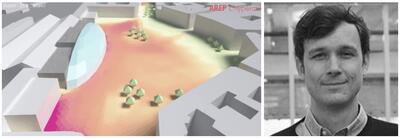
Édouard WALTHER, Associate Professor of Energy Engineering at INSA Strasbourg
Conference abstract
Computational prediction of the effects of urban design choices is an increasingly important factor in neighborhood and road renovation projects: materials, shading, and the presence of vegetation directly impact physiological comfort in occupied spaces.
In this presentation, the challenges and difficulties related to these calculations will be discussed:
selecting a modeling scale that provides useful results for the designers of tomorrow’s cities
improving the estimation of surface temperatures by accounting for the effects of local wind on convection as well as infrared radiative exchanges between facets of the same urban scene
the use of metamodels as part of a computational efficiency strategy, for projecting result fields derived from and reducing post-processing times.
Edouard WALTHER’s Career Path
A graduate of the ENS, Édouard WALTHER holds an agrégation in civil engineering (2011), is an INSA engineer, and earned a Ph.D. in Energy Engineering from the LMT in Cachan in 2016. After several years at AREP L’hypercube (a subsidiary of the SNCF) as a research engineer in building physics and later as scientific director, he entered higher education as an associate professor at INSA Strasbourg and subsequently as a faculty member and researcher.
Michèle WIGGER, Professor at Telecom Paris, IP Paris
Conference abstract
In his landmark papers from 1948, Shannon determined the fundamental (optimal) performance limits of basic communication and compression systems. At the same time, he also founded the mathematical field of information theory. Today, this theory is applied to derive the optimal performance not only of more complex communication and compression scenarios but also of various other systems, such as distributed estimation systems, detection systems, computing architectures, and coordination systems. In this presentation, I will explain Shannon’s fundamental result for communication systems and illustrate the more complex scenarios that information theorists are tackling today.
Michèle WIGGER’s Career
Michèle Wigger received her M.Sc. in electrical engineering, with distinction, and her Ph.D. in electrical engineering, both from ETH Zurich in 2003 and 2008, respectively. In 2009, she was a postdoctoral fellow at the University of California, San Diego, USA, before joining Telecom Paris, where she has been a full professor since 2018. She has held visiting professor appointments at the Technion-Israel Institute of Technology, the University of Zurich, and ETH Zurich. Dr. Wigger was a TPC co-chair for ISIT2025, has served on the TPC for numerous other conferences in information theory and communications, and has also served on various committees of the IEEE Information Theory Society, including its Board of Governors. Funding achievements include an Emergences Grant from the City of Paris, a Disruptive-ICT grant from Huawei, a Collaborative Project Grant from the French National Research Agency (ANR), and both ERC Starting and Consolidator Grants. She recently became an IEEE Fellow and has been awarded the “prix Michel Monpetit” jointly by INRIA and the French Academy of Sciences.
Morgane CHAPELIER, Space Imaging Performance Engineer, Optical Measurement Physics Division (DTN/TPI/MO), CNES (Toulouse)

Conference Abstract
From the ENS to CNES, this presentation traces the path that led me from mechanics to Earth observation. The first part of the presentation will focus on my career path and provide a brief overview of my dissertation. In structural mechanics, it is necessary to feed experimental data into numerical models to improve their representativeness. This is the objective of image-correlation field measurement methods, which make it possible to measure displacement fields (test-calculation feedback), shape fields (CAD model correction), or even to identify parameters of material behavior laws (used in the models). The optimization problems associated with these methods, when applied to finite-element models, yield highly irregular results. Non-intrusive regularization methods based on B-spline functions—which are highly smooth functions with interesting mathematical properties—are proposed.
The second part of the presentation is devoted to CNES (Centre National d’Etudes Spatiales), the French space agency, with a focus on Earth observation, the activities of my department, and a few illustrations of the physical quantities with which I work. CNES, a program agency and center of technical excellence, plays a central role in French space policy. CNES operates in five main areas: defense, Earth observation, science, space transportation, and telecommunications. Earth observation has numerous practical applications, making it possible to track the planet’s evolution on a large scale. Optical instruments are specifically designed for these needs—whether scientific or defense-related—particularly with regard to the spectral ranges imaged. Image quality then depends on the instrument’s compliance with the specific requirements, algorithmic processing that corrects for the instrument’s impact on the measurement, processing that distinguishes the contribution of each component of the observed scene (atmosphere, surface), and calibration methods. The Optical Measurement Physics Department ensures the radiometric quality of the images—that is, the accuracy of the values of each pixel in the images—when they represent physical parameters that are meaningful to users. It provides “mission engineering” for optical missions in which radiometry is critical: it serves as the liaison between users and the CNES project team responsible for developing the space system. It possesses extensive expertise in radiometric calibration methods and is involved in both instrument-specific issues and image processing techniques. A few examples of day-to-day activities will be provided.
Morgane CHAPELIER’s Career Path
Morgane Chapelier is currently an infrared imaging performance engineer at CNES, the French National Center for Space Studies. She is a graduate of the École Normale Supérieure’s Department of Mechanics; she obtained her agrégation in 2017 and went on to earn an M2 degree in Modeling and Simulation in Structural Mechanics and Coupled Systems ((MS)2SC). She completed her thesis at the Clément Ader Institute, a solid mechanics laboratory in Toulouse, while also working at the Toulouse Institute of Mathematics, focusing on non-intrusive, spline-based regularization of optimization problems for experimental mechanics. The problems addressed are directly related to image correlation and stereo-correlation, which are used to measure geometric defects and displacement fields in structures. These activities, which combine modeling, simulation, and imaging, led her to apply for a position at CNES in space imaging—a change in field but not entirely in tools. Today, she is involved in several space optics missions—both operational and under development—in collaboration with space industry partners and data users.
2024–2025
Clément Roch, associate professor at Sigma Clermont
Conference abstract
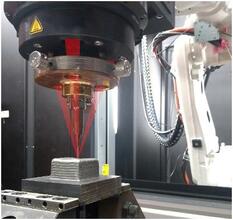
Additive manufacturing is viewed as a new approach to the industrial production of metal parts. Among the various technologies developed are concentrated energy deposition (DED) processes, notably including the laser-wire process. This process has the advantage of using a solid, inert material but has been little studied in the literature. Consequently, there are currently few models of this process that can bridge the gap between different experimental campaigns. To address this gap, a new approach is proposed, drawing on knowledge-based models, simulations, and experimental insights. The results help explain certain observed behaviors and improve predictions for manufacturing using the laser-wire process.
Clément Roch’s Career Path
Clément Roch is currently an associate professor at Sigma Clermont. He is a graduate of the École Normale Supérieure’s Department of Mechanical Engineering and obtained his agrégation in mechanical engineering in 2019 before pursuing a research-oriented master’s degree (M2) at Lurpa at ENS Paris-Saclay, leading to a Ph.D. in the same laboratory. The dissertation focused on feasibility issues in laser wire additive manufacturing, and some of its conclusions will be presented. Following his dissertation, Clément transitioned into teaching by accepting a position as an associate professor at an engineering school.
Louis Collin, a doctoral student at the Paris-Saclay Mechanics Laboratory and EDF’s ERMES R&D department, and Héloïse Rostagni, a temporary teaching and research assistant in the Department of Civil and Environmental Engineering at ENS Paris-Saclay.
Conference abstract
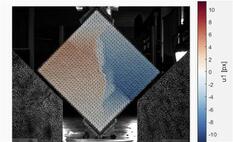
Masonry is a heterogeneous material whose overall behavior is anisotropic and influenced by significant local variations. Modeling it presents a multiscale challenge requiring an integrated approach combining experimentation and simulation. The accurate identification of phenomena such as degradation or dissipation relies on close collaboration between physical testing and numerical calculations. To this end, an innovative experimental method is being implemented, integrating multi-view image correlation and a virtual design phase to better understand and predict the mechanical responses of masonry.
The Careers of Louis Collin and Héloïse Rostagni
Louis Collin is currently a Ph.D. student at the Paris-Saclay Mechanics Laboratory (LMPS) and in EDF’s ERMES R&D department, while Héloïse Rostagni holds a position as a research assistant (ATER) at ENS Paris-Saclay, conducting her research in the same laboratory (LMPS). Both are alumni of the Civil Engineering department at the École Normale Supérieure and obtained their agrégation in construction engineering in 2021 and 2019, respectively. Héloïse completed a Master’s degree (M2) in Portugal, specializing in the structural analysis of historic buildings, while Louis enrolled at the École des Ponts for a Master’s degree (M2) in the sustainability of materials and structures, with a focus on energy. Although their master’s specializations differ, their thesis work converges on a common theme: masonry structures. Héloïse focuses on the nonlinear numerical modeling of dissipative mechanisms in masonry materials, while Louis works on the test-calculation dialogue applied to reinforced masonry partitions.
Emmanuelle ABISSET-CHAVANNE, Professor at Arts et Métiers in Talence
Conference Summary
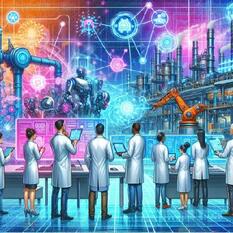
When I arrived at the DGM at ENS Cachan (at the time), my goal was to join a public works company; AI was still in its infancy in the industry, and ChatGPT was nothing more than a pipe dream. A few years later, I am a professor at Arts et Métiers in Bordeaux, and my research focuses on digital twins and artificial intelligence in the industrial sector, particularly for manufacturing process control and predictive maintenance.
During this seminar, I will share my career path and the various questions that have shaped it, leading me to my current position. I will also present my perspective on the role of a faculty researcher, including its advantages and disadvantages. Finally, I will present my research on AI as well as the educational projects I have led to train as many people as possible in AI and improve its acceptance in industry and beyond.
E. Abisset-Chavanne’s Career Path
Emmanuelle Abisset-Chavanne earned her agrégation in mechanics in 2009 and a Ph.D. from the LMT in Cachan in 2012, focusing on the modeling and simulation of laminated composite materials. After a postdoctoral fellowship at the GeM at École Centrale de Nantes, she became an associate professor at the same institution in 2013, working on multiscale modeling of nano- and microstructured materials and their manufacturing processes. In 2017, after obtaining her habilitation to supervise research at the University of Nantes, she joined the Institute for High-Performance Computing to develop data-driven models. In February 2019, she became a full professor at Arts et Métiers in Talence, focusing on the impact and contributions of artificial intelligence in industry, particularly for the monitoring of manufacturing processes and predictive maintenance.
Alexandre BACH, associate professor at CentraleSupélec and the GeePs laboratory
Conference abstract
Electric grids are at the heart of the energy transition. Their efficient operation is essential to enable the connection of a growing number of renewable energy generators. Distribution grids are particularly affected because the majority of this new electricity generation is connected to them. Consequently, new tools are needed to increase the reliability of these grids and reduce outage duration. One such tool is fault location.
Alexandre BACH’s Career Path
Alexandre Bach is currently an associate professor at CentraleSupélec and has been conducting research on power grids at the GeePs laboratory since October 1, 2024. A. Bach is an alumnus of ENS Paris-Saclay, in the EEA (Nikola Tesla) department. He earned his agrégation in electrical engineering in 2019 and then completed his Master’s degree (M2) in Physics and Energy Engineering (Paris-Saclay) in 2020. He completed his Ph.D. at GeePs from 2020 to 2023 on fault location in electrical distribution networks, followed by a postdoc at ULB (Brussels) from 2023 to 2024 on modeling failures in digital protection systems for electrical networks.
Julien HANS, Director of Research and Innovation at the CSTB
Conference Summary
There is a shared awareness of the climate emergency, as everyone is confronted—in their daily lives or through the media—with realities that bear witness to this upheaval. The construction sector contributes to anthropogenic emissions. Mitigation and adaptation solutions must therefore be developed to limit global warming while adapting to the impacts of this warming, which are already being felt. The Scientific and Technical Center for Building (CSTB) is developing a systemic and multidisciplinary approach to research and development to address these challenges. J. Hans, Director of Research and Innovation at the CSTB, will present these challenges and the strategic research priorities for decarbonizing the building sector, including examples of initiatives already underway—such as access to environmental data for informed decision-making, support for the widespread adoption of renovation, changes in building codes (environmental regulations), and performance measurement…
Julien HANS’s Career Path
Julien HANS, an ENS alumnus, holds an agrégation in Civil Engineering and a Ph.D. in Mechanics from Joseph Fournier University in Grenoble. In 2003, he joined the CSTB (Scientific and Technical Center for Building) (https://www.cstb.fr/) as a research and design engineer to work on the development of tools for assessing the sustainability of building products. He subsequently took charge of the CSTB’s Environment Division, overseeing various research programs on energy and construction as well as scientific projects such as the development of the ELODIE software (for calculating the environmental performance of structures). He also served as deputy director in charge of research at the Energy and Environment Division and later as chief operating officer of Energy and Environment, working to implement environmental regulations aimed at reducing the sector’s carbon footprint and promoting sustainable construction methods. He is currently Director of Research and Innovation at the CSTB.